
The skin on your face is the most exposed to the sun, pollution, stress, and hormonal changes. A good facial isn’t just a “spa treat”—it’s a deep hygiene and skincare treatment that helps keep your skin healthy, radiant, and smoother over the long term.
Below you’ll find the main benefits of a professional facial, how it’s performed, how often it’s recommended, and a few common questions—explained in clear Spanish and written for audiences in Mexico.
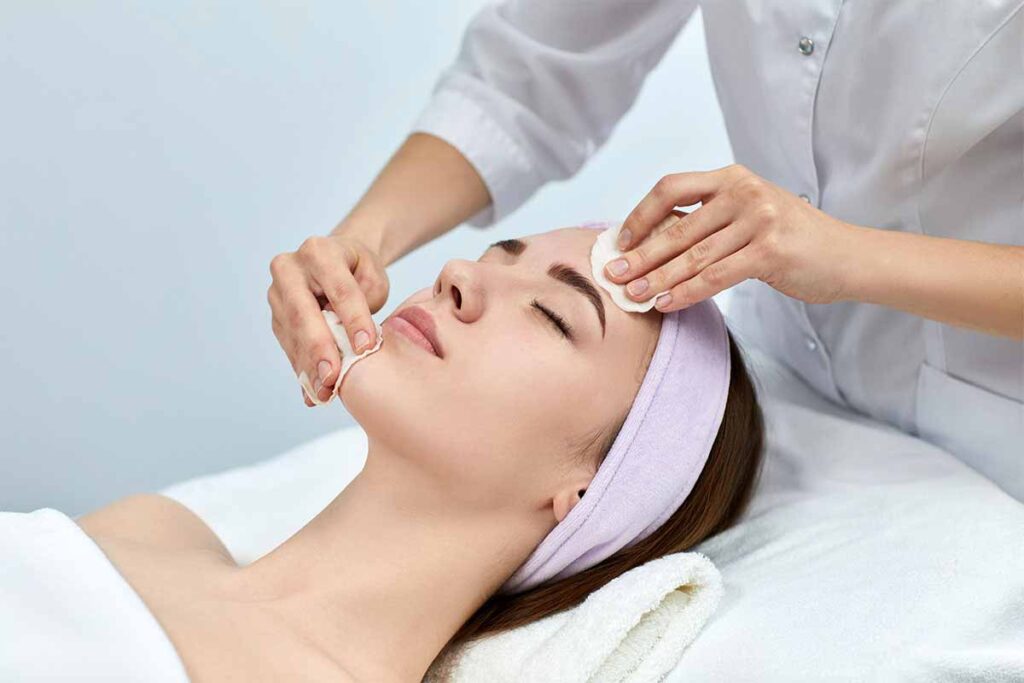
What exactly is a facial?
A facial is a professional skincare treatment performed in a private treatment room that combines different techniques such as:
- Deep cleansing
- Exfoliation
- Gentle extraction of blackheads and impurities (depending on skin type)
- Facial massage
- Application of targeted masks, serums, and moisturizers
The main goal is to improve the health of facial skin: cleanse thoroughly, rebalance, hydrate, and help prevent premature aging. Depending on the spa and your skin type, the protocol may include equipment-based treatments (steam, high frequency, microdermabrasion, etc.) or remain 100% manual.
Benefit 1: deep cleansing and removal of impurities
One of the clearest benefits of a professional facial is the deep cleanse it delivers—far beyond what an at-home routine can achieve:
- Removes makeup residue, sunscreen buildup, and environmental dirt that gets trapped in pores.
- Eliminates dead skin cells that remain on the surface.
- Helps decongest clogged pores and reduce blackheads and pimples.
With a deeper cleanse, skin “breathes” better, looks more even, and the risk of acne breakouts caused by excess oil and buildup is reduced.
Benefit 2: improved texture, softness, and radiance
When skin is deeply cleansed and free of dead skin cells, the way it looks and feels changes:
- Your face feels softer to the touch.
- The appearance of rough patches or dryness decreases.
- A healthy glow returns—different from oily shine.
Also, by smoothing the surface, light reflects more evenly and skin looks more radiant—something you’ll notice in photos, makeup, and everyday life.
Benefit 3: intensive hydration and stronger skin barrier
Many facials include a deep hydration phase using masks, serums, or targeted creams. This helps:
- Reduce tightness and dryness.
- Improve skin elasticity.
- Soften fine lines linked to dehydration.
- Strengthen the skin’s natural protective barrier.
Over time, sebaceous glands tend to produce less oil and the skin loses water more easily. A hydrating facial supports this natural function—especially for mature or dry skin, or skin that’s frequently exposed to sun and air conditioning.
Benefit 4: prevention of premature aging
A well-done facial isn’t just a short-term “rescue”—it also supports prevention:
- Controlled cleansing and exfoliation help encourage cell turnover.
- Skin remains firmer and smoother-looking.
- It can reduce the appearance of fine lines linked to dehydration and oxidative stress.
Many protocols include actives such as antioxidants, vitamins, or anti-aging ingredients that support collagen and help delay the visible appearance of wrinkles and loss of firmness.
Benefit 5: pH balance and better control of oil or sensitivity
Skin pH is key for a healthy barrier. When it’s disrupted, irritation, excess oil, or extreme dryness are more likely.
A professional facial helps:
- Regulate skin pH with appropriate products.
- Control excess sebum in oily or combination skin.
- Respect and soothe sensitive skin with gentle formulas and non-irritating ingredients.
The esthetician evaluates your skin type (dry, combination, oily, sensitive, acne-prone, mature, etc.) and selects products and techniques that help keep it balanced.
Benefit 6: better product absorption and smoother makeup finish
After a facial, skin becomes more receptive:
- Serums, creams, and daily treatments absorb better because there’s less dead skin buildup and fewer clogged pores.
- Makeup looks more even and wears better on smooth, hydrated skin.
- Foundation is less likely to look patchy or settle into expression lines or dry areas.
In other words, a facial boosts what you do at home: your skincare routine and your makeup perform better on prepped skin—not on skin overloaded with buildup.
Benefit 7: support for acne and blackhead control
For acne-prone skin, a facial focused on deep cleansing and oil control can be a great complement (though it doesn’t replace dermatological treatment when needed).
Depending on the case, it may include:
- Careful comedone extraction (blackheads and whiteheads).
- Products that help regulate oil production.
- Soothing or purifying masks that reduce inflammation and shine.
With the right technique and recommended frequency, it can help keep skin clearer, with fewer breakouts and less uneven texture.
Benefit 8: improved circulation and the “fresh face” effect
The facial massage included in many treatments isn’t just relaxing:
- Supports blood circulation in the face.
- Helps deliver oxygen and nutrients to skin cells.
- Can help slightly reduce puffiness and brighten dull-looking skin.
The result is that immediate “fresh face” look: less dullness, more rested features, and an overall healthier appearance.
Benefit 9: relaxation, well-being, and stress reduction
A facial is also a mental break:
- The treatment room, music, and massage help lower stress levels.
- That self-care moment can improve mood and overall well-being.
- Stress shows on the skin; reducing it indirectly supports skin health too.
Skincare isn’t just aesthetic—it’s connected to how you feel, how you rest, and your daily habits.
What types of facials are available?
Although each spa or clinic has its own commercial names, in general you’ll find:
- Deep-cleansing facial: focused on removing impurities, blackheads, and dead skin. Ideal for combination or oily skin and for maintaining good facial hygiene.
- Hydrating facial: restores moisture and elasticity. Very helpful for dry or mature skin, or after seasons of intense sun exposure.
- Anti-aging facial: includes actives like antioxidants, vitamins, or gentle acids to improve firmness, texture, and radiance in mature skin.
- Sensitive-skin facial: uses hypoallergenic products and gentler techniques to calm and protect reactive skin.
- Acne facial: emphasizes cleansing, oil control, and calming inflammation with products designed for acne-prone skin.
The most important thing is that the treatment matches what your skin truly needs at that time.
How often should you get a facial?
The ideal frequency depends on your skin type, age, and habits, but generally:
- Every 4 to 6 weeks is a commonly recommended range to keep skin in good condition.
- Very oily or acne-prone skin may benefit from slightly more frequent facials—always under professional guidance.
- Dry or sensitive skin can space sessions out more if you follow a consistent daily routine at home.
More important than going “very often” is that the facial is well-indicated, well-performed, and supported by consistent daily care.
What to expect during a professional facial
While the exact steps vary by location, a facial typically includes:
- Skin assessment
- The professional analyzes your skin type, your habits, and your main concerns (dark spots, acne, dryness, wrinkles, etc.).
- Initial cleanse
- Makeup, sunscreen, and surface dirt are removed.
- Exfoliation
- This may be mechanical (gentle granules) or chemical (controlled acids), depending on your skin.
- Steam and/or extraction
- In many cases, steam is used to open pores and, if needed, gentle blackhead extractions are performed.
- Masks and serums
- Targeted products are applied: hydrating, soothing, purifying, anti-aging, etc.
- Facial massage
- Improves circulation and helps product absorption, while also relaxing.
- Final protection
- Finishes with moisturizer and sunscreen so skin is protected when you leave.
Frequently asked questions
Does a facial hurt?
Usually, no. Some people may feel mild discomfort during extractions, but it shouldn’t be intense pain. If anything feels uncomfortable, let the professional know so they can adjust the technique.
Will my skin get irritated after a facial?
You may notice mild redness, especially if there were extractions or exfoliation. It typically goes down within a few hours. A good professional will use soothing products to minimize irritation.
Can I wear makeup after a facial?
Ideally, let your skin rest for at least a few hours. In many cases, it’s recommended to avoid makeup for the rest of the day to get the most out of the cleansing and hydration.
Are facials only for women?
No. Men’s skin also benefits from deep cleansing, hydration, and prevention of premature aging. Beards, razors, and pollution affect their skin too.
Does a facial replace my daily skincare routine?
No. A facial is a professional boost that enhances results, but the foundation is still your daily routine: cleansing, moisturizing, and sunscreen.
If I have acne, can I get a facial?
In many cases, yes—as long as it’s a facial designed for acne-prone skin and performed by a trained professional. If acne is severe or inflamed, it’s important to be under a dermatologist’s supervision.